The Confession That Condemns
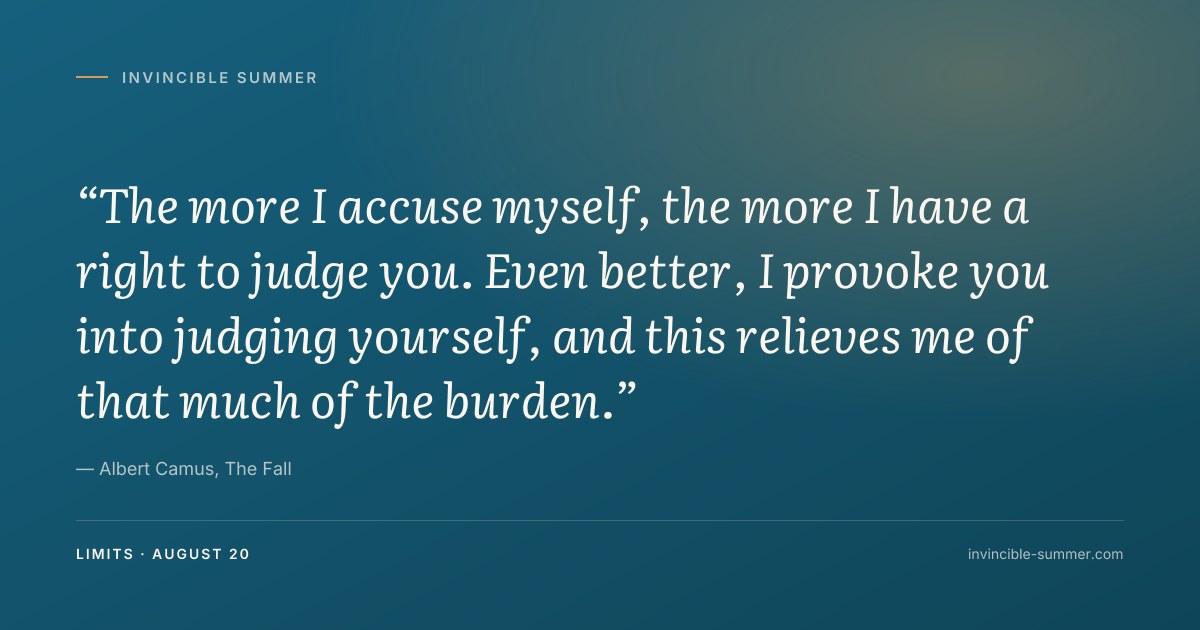
“The more I accuse myself, the more I have a right to judge you. Even better, I provoke you into judging yourself, and this relieves me of that much of the burden.” ALBERT CAMUS · THE FALL
On the last evening of The Fall, Jean-Baptiste Clamence finally explains his trade. He calls himself a judge-penitent. The method is to confess in public, at length, holding up the portrait of his own worthlessness until his listener starts to recognize a familiar face in it. Then comes the payoff. The more he accuses himself, the more right he has to judge you. Better still, he provokes you into judging yourself, which relieves him of that much of the burden.
Camus is naming a trick most of us have felt without being able to describe. Self-criticism, past a certain point, stops being humility and becomes a weapon. Whoever announces his flaws first has taken the high ground.
Nobody can accuse him of anything he has not already claimed, and now he is free to look around at everyone else. You meet this in the apology that somehow ends with you apologizing, and in the friend whose confessions leave you feeling audited.
The limit here is an odd one, because it applies to repentance itself. Even guilt can be pushed to the point where it turns into control, since a man who spares himself no accusation ends by allowing no one else any innocence. Clamence is a rebel who conquered himself and became a tyrant with an audience of one.
If you catch yourself confessing, check who it is for. Real acknowledgment leaves you quieter. The counterfeit leaves somebody else on trial.