Turning Away to See
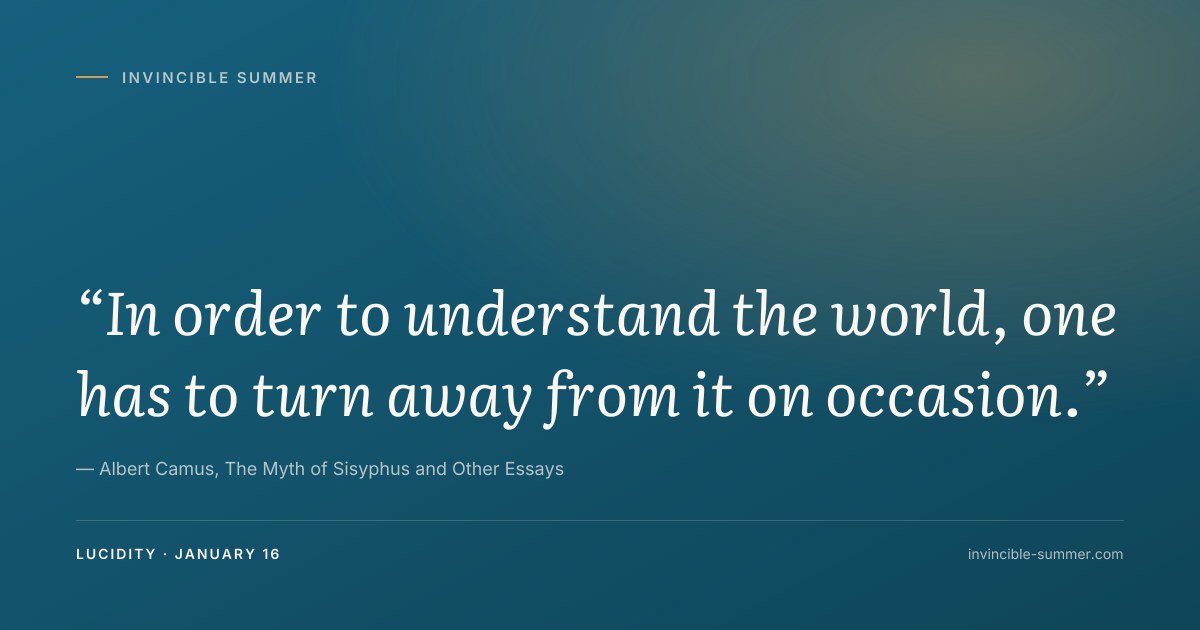
“In order to understand the world, one has to turn away from it on occasion.” ALBERT CAMUS · THE MYTH OF SISYPHUS AND OTHER ESSAYS
We live in an age of constant connection. Our phones buzz with notifications, our inboxes overflow, and social media offers an endless scroll of other people’s lives.
We pride ourselves on staying informed, being available, on never missing anything. And yet understanding seems harder to come by than ever.
Camus suggests something counterintuitive: that clarity requires distance. Not permanent withdrawal, but occasional retreat. The mind that never steps back from the world becomes submerged in it, unable to distinguish what matters from what merely demands attention.
Think of how differently you see a problem after a walk, a night’s sleep, or a week away. The distance doesn’t erase the problem. It reveals its true proportions. What seemed urgent often shrinks; what you overlooked suddenly becomes obvious.
This isn’t escapism. Camus wrote these words in an essay about finding solitude in a busy city, not about fleeing to monasteries. The turning away is temporary and purposeful, and ultimately in service of engagement. You step back precisely so you can return with clearer eyes.