Judgment as Defense
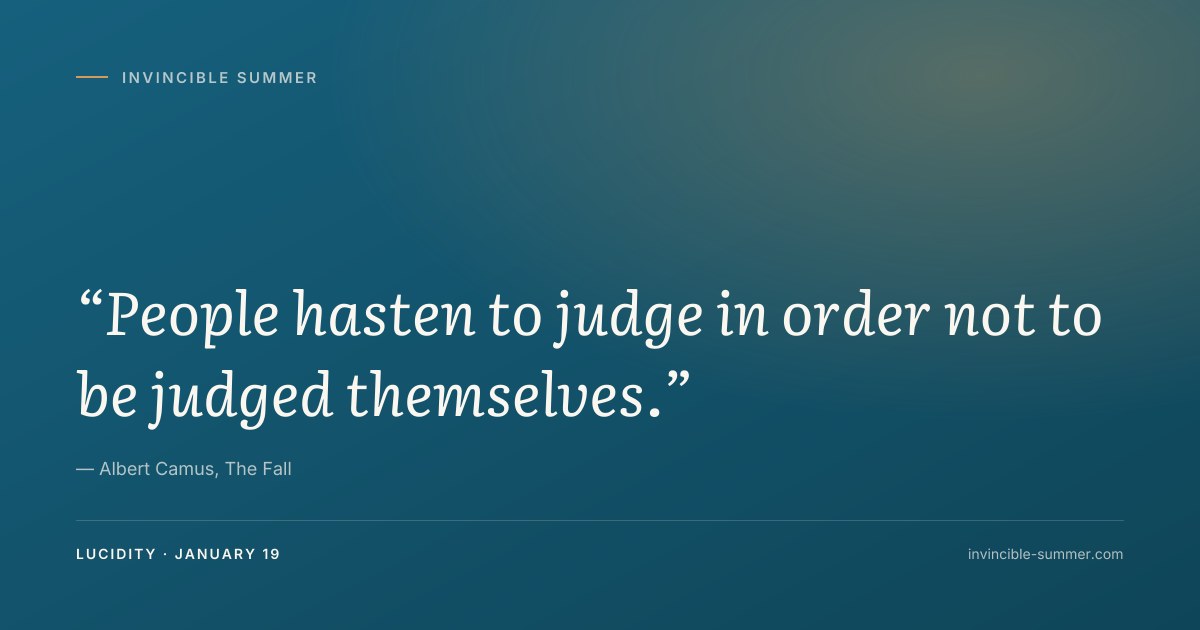
“People hasten to judge in order not to be judged themselves.” ALBERT CAMUS · THE FALL
Watch how quickly we form opinions about others. A stranger’s outfit, a colleague’s tone of voice, a friend’s decision we would have made differently. The verdict arrives almost before we have finished observing. We call this discernment, good judgment, common sense. But why the rush?
Camus suggests something uncomfortable: our eagerness to judge is a defensive maneuver. As long as we are the ones handing down assessments, we remain safely in the judge’s seat rather than in the dock. Every verdict we deliver is a small declaration: I am qualified to evaluate. I am above this. I would never.
The moment we stop judging, we become vulnerable. Without a clear position of superiority, we might have to examine ourselves with the same unforgiving eye we turn on others. We might notice that our own choices are just as questionable, our motives just as mixed, our failures just as real.
This is why gossip feels so satisfying and self-examination feels like work. Pointing outward is easy. Turning the lens around takes courage.
Slow the rush to judgment. Not because the other person has earned your leniency, but because every quick verdict you hand down is a question about yourself you have decided not to open. Catch one verdict today and open the question instead.