The Permanent Thing
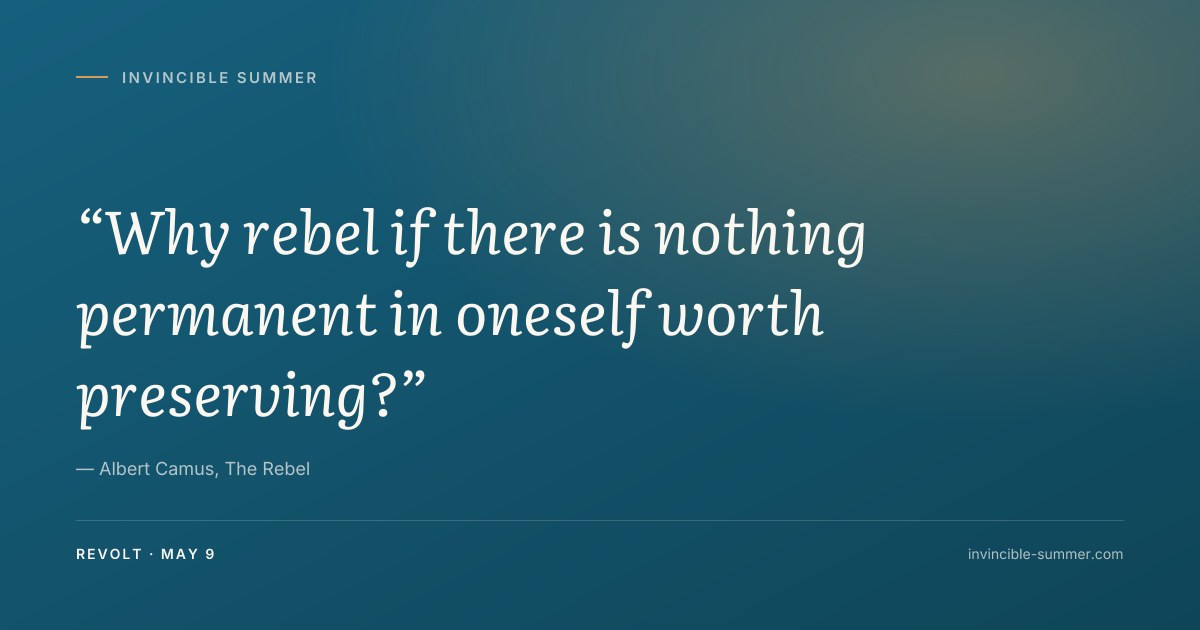
“Why rebel if there is nothing permanent in oneself worth preserving?” ALBERT CAMUS · THE REBEL
Camus is asking a quietly devastating question. If there is nothing permanent inside you, no core that resists change, no value you carry through your different selves, then why would you ever say no to anything? Every refusal assumes something is worth preserving. The rebel acts as if a self exists.
This is worth pausing on if you have spent any time in the school of thought that says the self is purely constructed, fluid, made of nothing but its surroundings. There is some truth there.
We are shaped by what shapes us. But Camus is pointing to the moment when you find that you cannot bend further. That moment proves something. There is, in there, a structure that holds.
You may not be able to name the permanent thing. Often the rebel cannot, and does not need to. The act itself reveals the substance, which is why the discovery arrives after the refusal rather than before it.
Rebellion is also a method of self-discovery. The line you hold becomes evidence of who you are, and long after the conflict has passed you can look back and see a piece of yourself coming into view. Wondering whether anything in you is solid? Listen for the refusals. They will tell you what the years have built.